Your AI flyer is still an advert. What the ad rules say before you print
The UK's advertising regulator says its rules apply however an advert was made. What that means for AI-made flyers, menus and posters, and a quick check before you print.
· 5 min read
By the Blessed Pixels team
A flyer through a door, a poster in a window and a menu board outside a café are all adverts. That stays true whether a designer drew them, you made them in Canva or an AI tool produced the picture in ten seconds.
The UK's advertising regulator made that point plainly this year. In guidance called AI and deepfakes: four things advertisers need to know before they hit run, the Committee of Advertising Practice, which writes the UK's advertising rules, said the rules are "media-neutral" and apply "regardless of how the content was created".
Most countries have their own version of these rules, and the principles are much the same. This post uses the UK as the example and sticks to the practical side: what to look at in an AI image before it goes on 500 flyers.
What the regulator actually said
The guidance makes four points. Put simply:
- The rules apply to AI-made adverts exactly as they do to any other advert. There's no special category.
- A fake endorsement, such as an AI-made celebrity who seems to recommend you, is likely to break the rules if people could believe it's real.
- If the AI produces something biased, offensive or misleading and you use it, that's your responsibility, not the tool's. In the guidance's words, the advertiser "remains responsible for any output used in their ads".
- Using automated tools to make or place adverts doesn't move that responsibility elsewhere.
The guidance points to real rulings where AI-made images in adverts were found to break the code. The same principle applies to a leaflet or a poster.
The guidance doesn't say you must label an image as AI-made. What matters is whether the advert as a whole is honest, responsible and doesn't mislead. Our print artwork terms take the same line: we may turn down an image we think is misleading, and you're responsible for how you use the finished files.
The quiet risk: pictures that promise more than you deliver
The guidance focuses on deepfakes and offensive content. For an everyday business, the more likely trap is simpler. AI tools make things look better than they are, and an advert that shows customers something they won't get can mislead them.
Some examples worth thinking about:
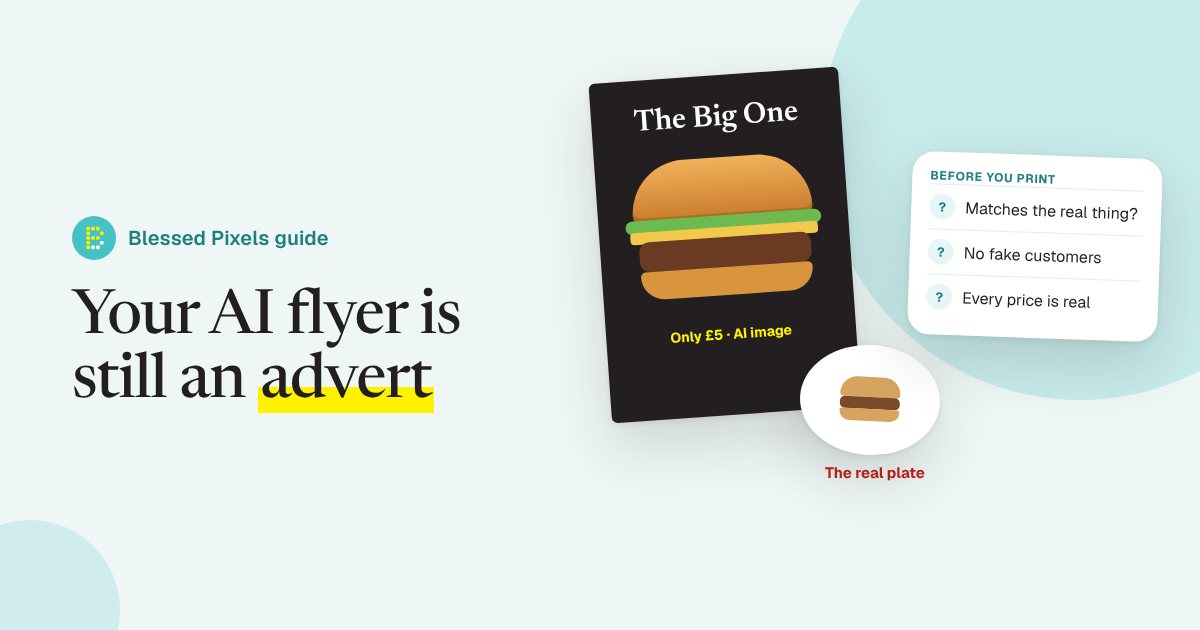
- A café menu with AI pictures of dishes that look nothing like what comes out of the kitchen: twice the size, extra toppings, different plates.
- A salon flyer showing a hairstyle or a result the salon didn't create.
- A holiday let or venue poster with an AI room that's bigger, brighter or has a view the real one doesn't.
- A product leaflet showing features or finishes the product doesn't have.
Decoration is different. A snowy background, a pattern, an illustrated border or a cartoon mascot doesn't promise anything about your product. AI images work very well there, and that's where we'd usually suggest using them, as we wrote in our guide to festive print with AI images.
If an image shows the thing customers are buying, the safest choice is a real photo of the real thing. AI can still help to tidy the background or improve the lighting, as long as the product itself stays true.
Fake people and fake endorsements
AI makes it easy to put a smiling "customer" or a well-known face on a poster. Both can go wrong.
A recognisable real person, celebrity or not, shouldn't appear in your advert without their permission. The regulator's point about deepfakes is about misleading people, and there are separate legal risks too, which the guidance suggests getting advice on.
An invented person is less obviously a problem, but think about what they're doing in the picture. A made-up model enjoying your product as decoration is one thing. A made-up "happy customer" with a quote is a testimonial that never happened, which is misleading.
Our print-ready packages won't touch images that copy a real person without permission, and our earlier post on using AI images on flyers and menus covers the copyright side.
Check the small print the AI wrote
AI tools sometimes add words of their own: a price, a "50% off", a date, a "best in town" badge. You didn't ask for them, but if they end up in print, they're your claims.
Read every word on the image before you order. Delete anything you can't back up. Prices, offers and dates need to be the real ones, and comparison claims like "cheapest" or "best" need evidence.
Replacing AI-made text with clean, real type is one of the common AI artwork problems we fix, which also gets rid of any claims you didn't mean to make.
A five-question check before you print
Run through this with the finished design in front of you.
- Does the picture show what customers will actually get, or is it decoration that promises nothing?
- Is there anyone recognisable in it, and if so, do you have their permission?
- Is anyone shown recommending you who didn't?
- Is every word, price and offer real and something you can back up?
- Would you be comfortable if a customer held the flyer next to the real thing?
If the answers are good, the next job is making the file print properly, which is what our print-ready service does. The regulator also offers free advice for advertisers through its Copy Advice team if you're unsure about a particular advert.
Frequently asked questions
Do I have to label AI images in my adverts?
The UK guidance doesn't say every AI image must be labelled. What matters is that the advert doesn't mislead. If an AI image could make people believe something untrue, fix the image rather than adding a label.
Can I use AI food photos on my menu?
For decoration and backgrounds, yes. For pictures of specific dishes, use real photos of what you serve, or make sure the image genuinely matches the dish.
Who is responsible if an AI tool creates something misleading?
The business that uses it in an advert. The regulator's guidance says the advertiser stays responsible for AI output used in their ads.
Do these rules apply outside the UK?
The UK rules apply to UK adverts. Most countries have similar rules against misleading advertising, so the same habits are sensible wherever you trade.
Can I use an AI-made person on my poster?
Yes, as decoration, if they don't look like a real person and aren't presented as a real customer giving a recommendation.