Is a Facebook page enough for your business? What Facebook's link test tells you
Facebook is testing a limit on how many links business Pages can post. What that means if your Page is your only website, and when it's time for a real one.
· 5 min read
By the Blessed Pixels team
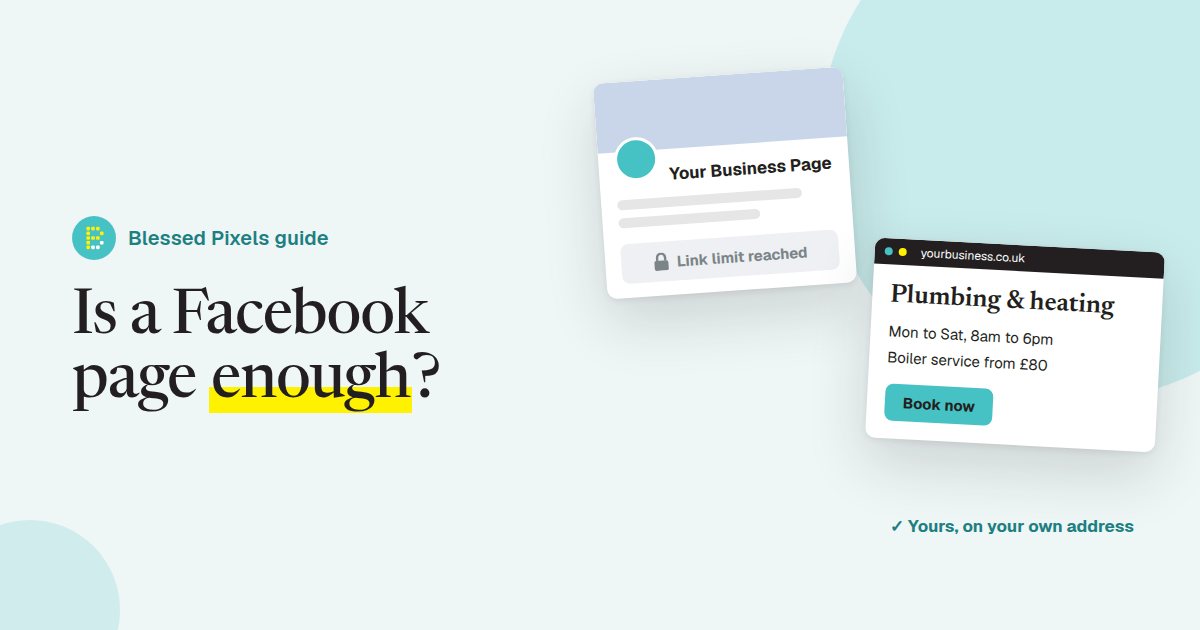
Facebook has been testing a cap on links. Press Gazette reported that Meta is testing charging creators and businesses to post more than two links a month from their Pages. It's a test, not a rule for everyone, and it may change. But it's a useful nudge for any business whose Facebook Page is doing the job of a website.
So, is a Facebook page enough? For a lot of businesses it was a perfectly good start. As your only home online, though, it has one big weakness: someone else owns the building, and they can change the rules whenever they like. This post covers what a Page does well, what it can't do, and how to tell when it's time for a proper website.
What a Facebook page does well
Let's be fair to it. A Page is free, quick to set up and it's where a lot of your customers already scroll. For a café posting today's specials, a dog groomer sharing before-and-after photos or a mobile hairdresser filling last-minute gaps, it works.
It's also good for the things a website is bad at: comments, quick replies, photos from last Saturday, an event people can say they're going to. Keep doing all of that. Nothing in this post says close your Page.
The question is whether it should be the only place a customer can find out who you are, what you charge and how to book. That's a job for a website, and it's what we build on our pay monthly website plans.
What you don't control on Facebook
Everything about how your Page looks and who sees it is up to Meta. The link test is one example. Others you may have met already: posts reaching fewer people than they used to, layout changes you didn't ask for, and Pages restricted or locked while a review happens, sometimes with a slow route back.
None of this means Facebook is out to get you. It means your shop window is on someone else's high street, and the landlord writes the rules. If the Page disappeared tomorrow, how would a new customer find your prices or your phone number?
A website on your own web address (your domain) is the one place online where you decide what's there. It's worth owning that address yourself, in your name, whoever builds the site. Our plans are set up that way, as the questions about website plans explain.
Why AI tools and Google need a website too
More people now ask ChatGPT, Gemini or Google's AI Mode which business to use. Those tools mostly read the open web. Much of Facebook sits behind a login, and a crawler that can't log in sees very little of your Page. We went through what those crawlers can and can't read in what AI crawlers see on your website.
Google Business Profile helps a lot for local searches, and it has a field for your website. Google's guidelines for representing your business expect the details on your profile to be accurate and consistent. A website that says the same hours, address and services as your profile backs that up. A Facebook link in the website field works, but it gives Google and AI tools far less to read than a page of plain text about what you do.
If you already have a site and wonder how well AI tools can read it, our free AI check tells you in about 30 seconds.
Signs it's time for a real website
You don't need one the day you start trading. You probably do need one when two or three of these are true:
- Customers message you asking things your Page should answer, like prices, areas you cover or whether you're open on Sunday.
- You want people to book, order or pay without a back-and-forth on Messenger.
- You're quoting bigger jobs and people check you out before they ring. A proper site looks established in a way a Page doesn't.
- You'd like to show up when someone asks ChatGPT or Google for your service in your town.
- You've lost access to a social account before, or you'd be in trouble if you did.
Keep it small to begin with. Most businesses need a handful of pages, not twenty. We listed the six that matter in what pages a business website needs.
Moving from a Facebook page to a website, step by step
You've already got most of the content. It's just scattered across posts.
- Collect the facts. Hours, area you cover, prices or "from" prices, the services you offer, how to book. Write them in a document in plain sentences.
- Pick your best photos. Ten good ones beat fifty blurry ones. Your own work and your own premises, not stock images.
- Gather your common questions. Scroll back through Messenger. The questions people ask most are the start of your FAQ page.
- Get a domain in your name. Something short and spellable. A .co.uk or .com is fine for most.
- Link the two together. Put the website on your Facebook Page, your Google Business Profile and your other profiles, and put your social links on the website.
If you'd rather not build it yourself, that's what our website plans are for: we design and build the site, host it, keep it up to date and make small changes each month, for a fixed monthly price. Check the plans page for any current offers.
Frequently asked questions
Is a Facebook page enough for a new business?
For the first few months it can be. Once customers start asking for prices and booking details, or you want to be found on Google and in AI answers, a website does that job better.
Is Facebook really limiting links for business Pages?
Meta has been testing it. Press Gazette reported a test where some Pages can only post two links a month without paying. It's a test, so it may not reach every Page or may change.
Will a website replace my Facebook page?
No. Keep both. Use Facebook for chat, photos and events, and the website for the facts, prices and bookings that customers and search engines need to find.
Can ChatGPT read my Facebook page?
Only a little. A lot of Facebook needs a login, which crawlers don't have. A website with plain text about your business is much easier for AI tools to read and repeat.
How much does a simple business website cost?
It ranges from a do-it-yourself builder subscription to thousands for a bespoke build. Monthly plans sit in between: no big upfront bill, with hosting and changes included.